Back to Top
Skip to main content
NETL Logo
Pipeline
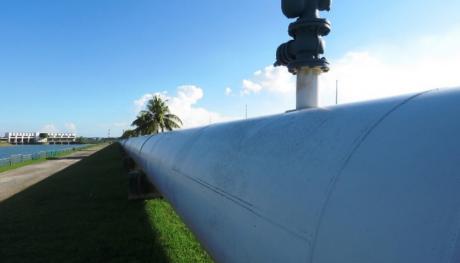
An NETL review of corrosion sensing technology demonstrates the powerful potential of emerging applications to provide continuous real-time, in-situ monitoring of oil and natural gas infrastructure. This capability empowers industry to prevent pipeline leaks and failures, boosting infrastructure resilience and safety while mitigating unnecessary expenses that are often passed on to consumers via energy bills. The United States is home to roughly 400,000 miles of oil and natural gas pipelines, which transport vital fuels across the country to meet energy demands. Every inch is susceptible to corrosion, the natural deterioration of metal materials caused by chemical or electrochemical reactions with the environment. Corrosion leads to structural damage that costs billions of dollars each year; however, it’s challenging to detect during routine maintenance and inspections, and current state-of-the-art solutions typically involve periodic inspections rather than real-time monitoring. 
turbine
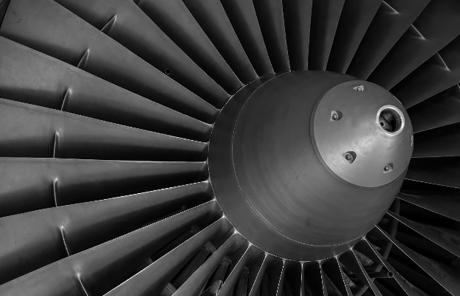
A new NETL study identified strong opportunities for global export of high-performance materials that are used in power plants and the aerospace industry – exports that could mean increased demand for U.S. goods and services and positive impacts for the U.S. economy. The report, “Assessing the Export Potential for High-Performance Materials,” examined the export potential and economic impacts resulting from both the primary and potential secondary applications of NETL high-performance materials (HPM) research. The research specifically assessed the potential international demand for HPMs in advanced ultra-supercritical (AUSC) and natural gas combined cycle (NGCC) power plants, as well as the aerospace sector. The study estimated the potential economic impacts within the U.S. associated with estimated HPM exports in each market.
Gas Turbine
An NETL-sponsored project is leveraging artificial intelligence in a manner that will lead to more efficient, long-lasting and reliable gas turbines to meet America’s growing energy needs. As advanced energy systems move toward higher temperatures to boost efficiency and reduce emissions, monitoring their performance under such harsh conditions becomes a challenge. Existing monitoring tools for gas turbines are costly, time-consuming and complicated, involving wires and risks for damage. With funding and guidance from NETL, North Carolina-based Siemens Corp. and its partners are developing smart sensor systems that provide real-time monitoring of gas turbine components, thereby enabling condition-based maintenance and prediction of each component’s remaining useful life.
AI Image
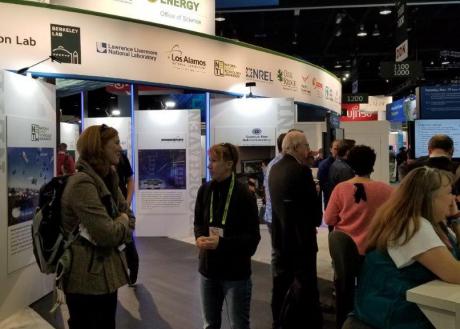
NETL Director Brian Anderson, Ph.D., and other Lab personnel will exchange information and ideas with industry, universities, investors and end-use customers at the U.S. Department of Energy’s (DOE) InnovationXLab Artificial Intelligence (AI) Summit Oct. 2-3, at the historic Drake Hotel in Chicago. The AI Summit, hosted by Argonne National Laboratory, will convene industry leaders from the energy, transportation, manufacturing and health care sectors, public officials and researchers from DOE national laboratories to discuss how advanced AI tools and machine learning (ML) techniques can support business transformation and drive economic growth. The continued leadership of the United States in AI is of paramount importance to maintain economic and national security, and events such as the InnovationXLab AI Summit are highlighting how business and industry can leverage the power of DOE’s national laboratories and AI to enrich the lives of Americans.
FOA Announcement Logo
The U.S. Department of Energy’s Office of Fossil Energy and NETL have selected four projects to receive approximately $4.6 million in federal funding for cost-shared research and development (R&D). The projects will accelerate the development and commercialization of treatment technologies that reduce waste water that is being injected into disposal wells and increase water supplies for reuse. These projects are supported through funding opportunity announcement (FOA) DE-FOA-0002004, Low-Cost, Efficient Treatment Technologies for Produced Water. This R&D effort supports the Water Security Grand Challenge, a White House-initiated, DOE-led framework to advance transformational technology and innovation to meet the global need for safe, secure, and affordable water. In particular, this FOA advances the Grand Challenge’s goal to transform the energy sector’s produced water from a waste to a resource.  
Running
With the newest release of NETL’s carbonaceous chemistry for computational modeling, or C3M, software, researchers have leveraged machine learning approaches to overcome one of the biggest drains to computational resources when modeling advanced energy systems. Version 19.1 of C3M introduces the Machine Learning Accelerated Stabilized Explicit Variable Load (MLA-STEV) software that solves complex chemical reaction equations much faster than previous iterations, drastically shortening design time and significantly reducing research and development costs.“The MLA-STEV solver could be used to help accelerate the design of cleaner and more efficient energy systems like gasifiers,” said Dirk VanEssendelft, Ph.D., referring to an energy technology that converts organic material such a coal into useful fuels and chemicals.
Groundwater logo
NETL shared innovative research and development (R&D) projects focused on responsible water management and protection of the nation’s limited water resources at a national forum this week in Oklahoma. The Groundwater Protection Council hosted its 2019 Annual Forum Sept. 15-17 at Oklahoma City’s Sheraton Downtown. The organization’s mission is to promote the protection and conservation of groundwater resources by providing an important forum for stakeholder communication and research in order to improve the role of government in the protection and conservation of groundwater. During a Monday morning session focused on produced water, NETL State & Local Partnerships Water Lead Tom Feeley presented an overview of the Lab’s water and energy activities.
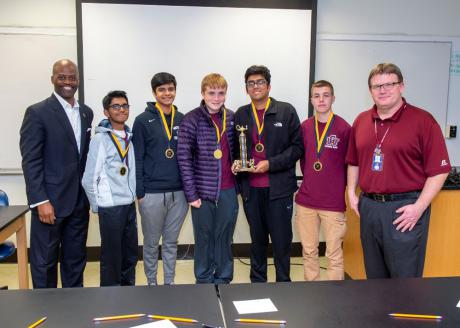
NETL K-12 STEM Education & Outreach program lead Ken Mechling served as a co-presenter at the Energy “Train the Trainer” Teacher Workshop in the Ridgway School District in Ridgway, Pennsylvania, Aug. 15.
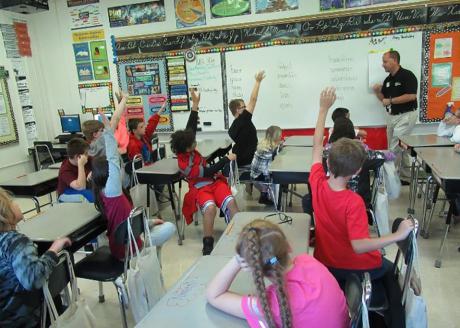
NETL K-12 STEM Education & Outreach program lead Ken Mechling served as a co-presenter at the Energy “Train the Trainer” Teacher Workshop in the Ridgway School District in Ridgway, Pennsylvania, Aug. 15. During the workshop, educators and administrators learned more about topics surrounding energy and ways to incorporate science, technology, engineering and math (STEM) learning into the classroom. Seneca Resources Company LLC, Apex Energy LLC, NETL and the National Energy Education Development (NEED) Project teamed up to provide the workshop for teachers in grades 4-12, as well as administrators. During the workshop, Mechling shared STEM ideas with teachers to use with students during the school year. They also listened to speakers in the energy industry, shared energy resources and ideas with one another, investigated partnership opportunities and discussed ways to integrate energy and STEM career education into fun lessons for students.
Water
During a visit to western North Dakota this week, Assistant Secretary for Fossil Energy Steven Winberg got a firsthand look at technology originally developed for the U.S. Army but now to be assessed by NETL in producing fresh water from brine used in energy operations. The equipment is being tested at the University of North Dakota (UND) Energy & Environmental Research Center’s Brine Extraction and Storage Test site, which is among several research sites Winberg is touring. “This project is one of many NETL-led technologies underway within the Office of Fossil Energy to address competing water needs and challenges,” Winberg said. “Water is a limited resource, yet there’s an inextricable link between water and energy. We need treatment technologies that economically derive clean water from alternative sources and facilitate water reuse to increase efficiency and reduce water consumption.”
NETL’s Walter Wilfong, left and McMahan Gray, right, experiment with the BIAS technology.
NETL research has resulted in a technology that offers a practical, affordable and green approach to removing the threat of lead and other heavy metals from streams that ultimately contaminate the drinking water of American homes – a threat that jeopardizes the health of millions of children – and can also help recover valuable rare earth elements (REEs) from water supplies. The heart of the technology is an NETL-developed material known as basic immobilized amine/silica sorbent (BIAS). It was initially developed to separate gases as part of carbon capture research and has received numerous awards and recognitions for its effectiveness. NETL’s McMahan Gray led a Laboratory team consisting of Brian Kail, Walter Wilfong, Qiuming Wang, Fan Shi, Tom Tarka, and Tuo Ji that had ideas for wider applications for BIAS. They adapted the core BIAS technology to create a product that resists water, is regenerable, and can target heavy metals and even REEs from water supplies.