Back to Top
Skip to main content
NETL Logo
STEM Students
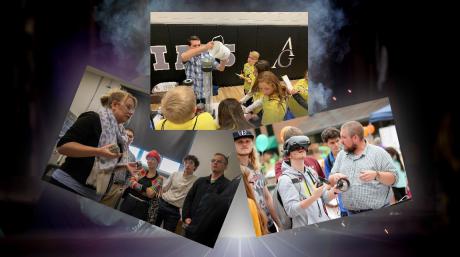
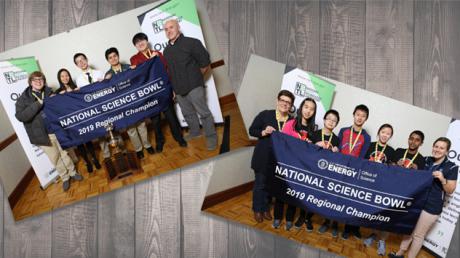
Toss-up question, mathematics: How many students nationwide compete in regional Science Bowls each year? The correct answer is more than 9,000 high school students and 4,500 middle school students. Hundreds of those students compete at the West Virginia and Western Pennsylvania Regional Science Bowls, organized and co-hosted each year by NETL to promote science, technology, engineering and math (STEM) education. These fast-paced, quiz-style events help middle and high school students expand their science and math knowledge, build teamwork skills, and learn how to excel under pressure as they compete for a spot in the U.S. Department of Energy’s National Science Bowl. Described as “a competition like no other,” more than 290,000 students have participated in the National Science Bowl throughout its nearly 30-year history. NETL Director Brian J. Anderson, Ph.D., is among them. His first exposure to the Lab was as a Science Bowl participant at what was then known as the Morgantown Energy Technology Center, a predecessor to NETL.
CESMII
NETL’s work in designing transformative advanced energy systems through a partnership of academic institutions and U.S. Department of Energy national laboratories — known as the Institute for the Design of Advanced Energy Systems (IDAES) — and its innovations in the field of sensor development has drawn the attention of the Clean Energy Smart Manufacturing Innovation Institute (CESMII). Haresh Malkani, Ph.D., chief technology officer of CESMII, visited NETL in Pittsburgh Wednesday to learn more about the Laboratory’s work and discuss potential areas of mutual interest like sensor development and IDAES activities. CESMII, launched in 2016, is the ninth institute in the Manufacturing USA network. Its focus is the research and development of technologies and solutions that can capture, share and process the increasing amounts of information available at manufacturing facilities. These technologies are expected to enable dramatically improved process control and operation, and enable benefits such as improved energy efficiency, equipment reliability and productivity gains, as well as related improvements in safety and quality in manufacturing processes. 
NETL Website launch
NETL, the nation’s only National Laboratory dedicated to fossil energy research, today launched a new website that highlights the Laboratory’s mission, research news, educational offerings, core competencies, business opportunities, and technologies available for commercialization. The new website, https://netl.doe.gov/, offers access to the latest research information generated by the Laboratory on oil, coal, natural gas and other energy topics as well as posts about NETL’s work by news organizations from around the nation. NETL Director Brian Anderson explained that the new site was created to provide fast and efficient access to energy answers and assistance – one of many ways NETL experts act in support of the Laboratory’s mission to discover, integrate, and mature technology solutions to enhance the nation’s energy foundation and protect the environment for future generations.
NETL to Convene Workshop on Development of a Domestic Materials Supply Chain for Advanced Coal-Based Power Generation
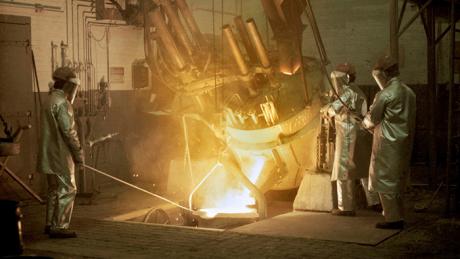
NETL, the U.S. Department of Energy’s (DOE) only national laboratory devoted to advancing fossil energy technology, will host a special workshop Wednesday, Nov. 14 at the Pittsburgh Airport Hyatt Regency Hotel devoted to the development of a vital domestic materials supply chain for advanced coal-based power generation. The workshop, titled the 2018 Crosscutting Workshop on Developing a Domestic Supply Chain for High Temperature Steam Cycles, will feature presentations and perspectives from DOE and NETL experts, end users and materials vendors that highlight current materials supply chain activities and needs with a specific goal of identifying obstacles to further developments.
With expected shortfalls of 1-2 million unfilled jobs in science-, technology-, engineering- and math- (STEM-) related industries over the next decade, it will be imperative to attract and retain more people – including underrepresented populations – to join the STEM workforce.
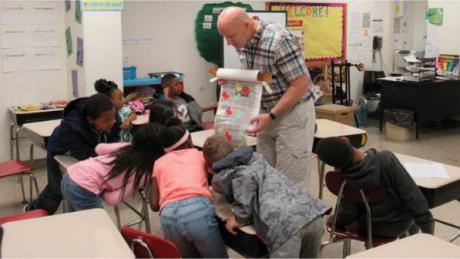
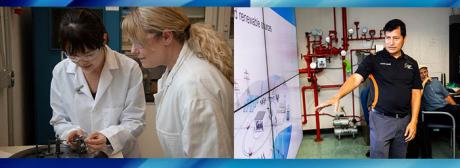
With expected shortfalls of 1-2 million unfilled jobs in science-, technology-, engineering- and math- (STEM-) related industries over the next decade, it will be imperative to attract and retain more people – including underrepresented populations – to join the STEM workforce. These future opportunities include high-tech and highly skilled jobs in energy and advanced manufacturing in active National Energy Technology Laboratory (NETL) research areas, such as advanced computing, new composite materials, novel manufacturing processes and innovative research related to fossil fuels. 
Two views of fractured Marcellus shale rock core colored to reflect mineral density.
Without ever leaving the Lab, NETL researchers are exploring the microscopic spaces in rocks, called pores, to take measurements as they seek a better understanding of how liquids and gases interact. These measurements are expanding scientific knowledge of the subsurface environment to ensure safe and effective carbon storage, enhanced resource recovery, and basic scientific understanding of subsurface phenomena. Rather than shrinking scientists, NETL is using cutting-edge imaging technology that enables 3D visualization and analysis of volumetric data at the submillimeter scale. The innovative software, called SyGlass, brings data to life through virtual reality, allowing researchers to examine real-world energy challenges in three dimensions.
Pipeline integrated with distributed fiber optic sensing cables
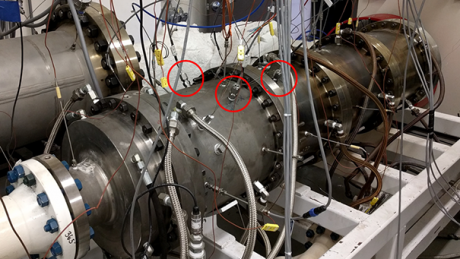
Secure and reliable natural gas delivery is essential as the industry grows to meet an increasing portion of America’s energy needs. Natural gas accounted for nearly 32 percent of the electricity produced in the United States in 2017, and the U.S. Energy Information Administration expects that figure to rise to nearly 39 percent by 2050. More than 300,000 miles of large transmission pipelines transport vast amounts of domestic natural gas nationwide. Every inch is susceptible to threats such as corrosion, the natural deterioration of metal materials caused by chemical reactions to the environment. Corrosion is one of the leading causes of pipeline leaks and ruptures, which threaten the safety of industry employees and the security of the nation’s energy supply.  Researchers at NETL are working to address these concerns by developing advanced fiber-optic sensor systems that protect America’s pipelines by preventing leaks and failures before they occur. These systems will supersede conventional technologies, which are designed to detect pipeline leaks and failures that have already happened.
NETL NEWS
NETL, the only U.S. Department of Energy (DOE) national laboratory focused on development of advanced fossil energy technologies and the only government-owned and government-operated (GOGO) national laboratory, is playing a prominent part in DOE’s new Lab Partnering Service (LPS) Internet presence that offers technology investors and innovators multi-faceted search capabilities across a range of technology areas resident in the national laboratories.
NETL NEWS
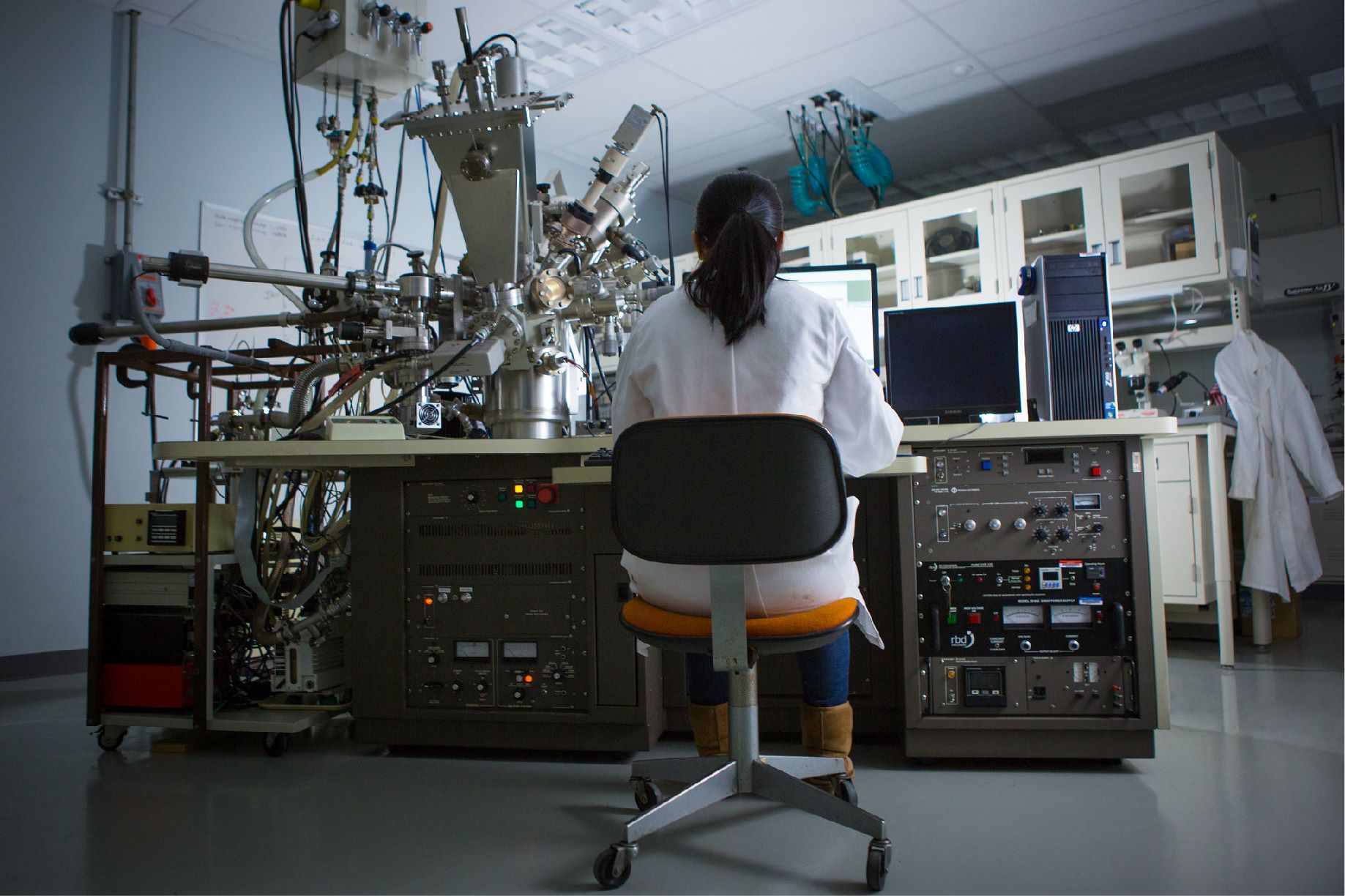
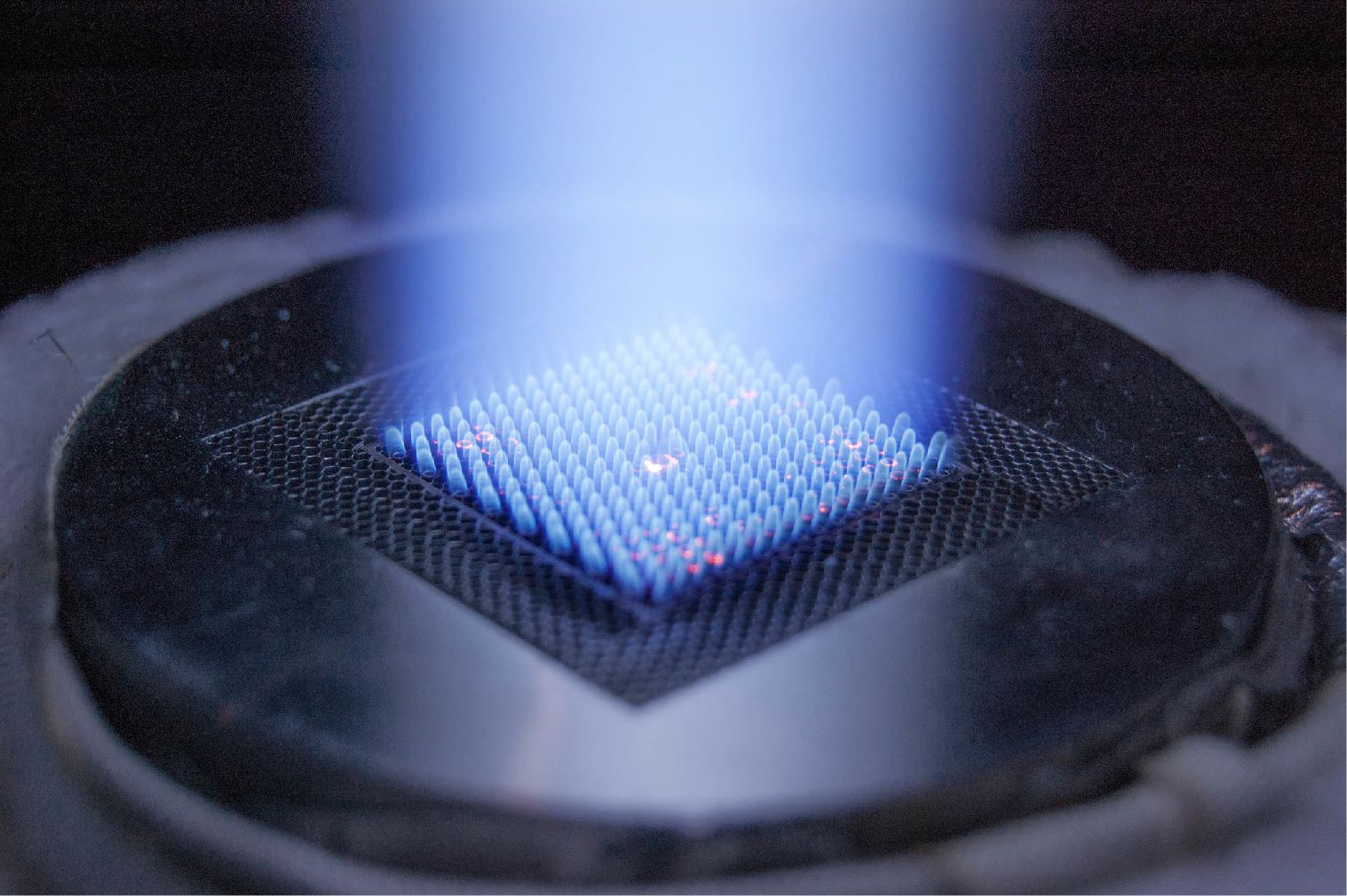
In 1917, when Albert Einstein suggested that it might be possible, under the right conditions, to produce light rays that could be directed at atoms to produce energy in beams of light, he created the theory behind what would become light amplification by stimulated emission of radiation – what we call lasers today. Einstein never dreamed that researchers would someday use this principle to improve fossil fuel-based power generation systems – but that’s just what’s happening at NETL. NETL researchers are using lasers to make better sensors that work more efficiently inside the harsh environments of power generation systems, from traditional coal-fired power plants to solid oxide fuel cells, gas turbines, boilers, and oxy-fuel combustion.
NETL NEWS
The U.S. Department of Energy (DOE) has selected 15 projects to receive nearly $8.8 million in federal funding for cost-shared research and development (R&D) projects to develop innovative technologies that enhance fossil energy power systems. The newly selected projects fall under DOE’s Office of Fossil Energy’s Crosscutting Technology Research Program, which advances technologies that have a broad range of fossil energy applications. Specifically, the program fosters innovative R&D in sensors and controls, modeling and simulation, high-performance materials, and water management.