
 Share
 Contact
Developing advanced turbine technologies in pursuit of power generation with higher efficiency, flexibility, and lower costs
The National Energy Technology Laboratory (NETL) Advanced Turbines Program is developing innovative advanced turbine technologies to enable higher efficiency and fuel flexibility with the goal of producing reliable, affordable, and diverse energy supplies, supporting U.S. energy dominance.


Explore Key Technology Areas
High-efficiency turbine architectures engineered for extreme temperatures and pressures. Research advances hot-gas-path materials, durable thermal barrier coatings, and sophisticated cooling schemes to extend component life and optimize heat rates for dispatchable power generation.
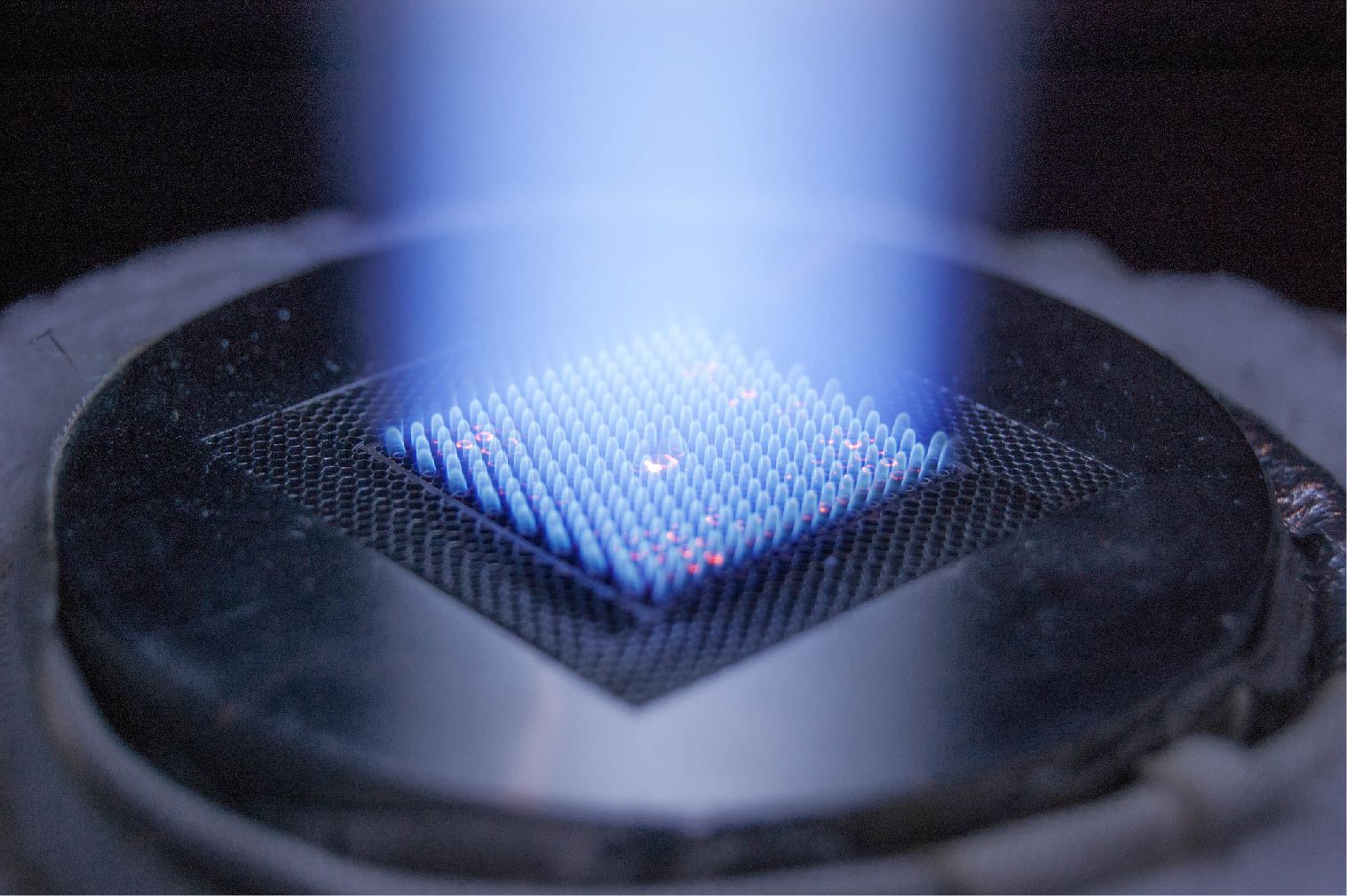
Next-generation combustion utilizing continuous detonation waves to raise fluid pressure internally. By replacing constant-pressure burn cycles, this work addresses unsteady aeromechanics, cooling, and natural gas integration to deliver whole-point thermal efficiency gains.
Compact, high-density power cycles operating carbon dioxide above its critical point to minimize compressor work. Focus areas include compact turbomachinery, robust seals, and microchannel recuperators to deliver superior thermal efficiency with negligible water consumption.
Combustor technologies enabling seamless operation across natural gas, pure hydrogen, syngas, and alternative fuel blends. Research focuses on dynamic flame stabilization, flashback mitigation, and low-NOx performance to support reliable, fuel-agnostic grid operation
Program Area

USA Gas Turbine Fleet
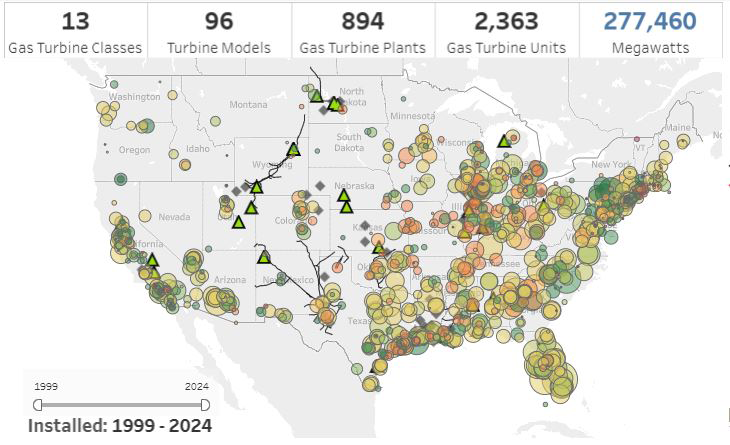
Legacy power plant units (1998 or earlier) are generally excluded. Efficiency is estimated based on an empirical relation using turbine class or turbine inlet temperature when known. Turbine operational data is gathered from the Energy Information Administration (EIA) monthly reports (EIA-860 and EIA-923) as well as independent public resources.
Additional Resources




NETL implements this effort as part of DOE’s Power, Fuels, and Chemicals Program.