Business

Business
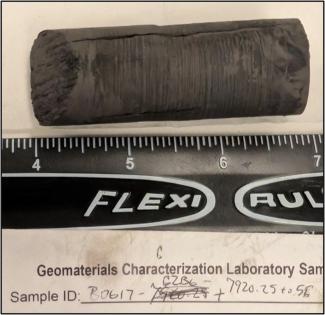
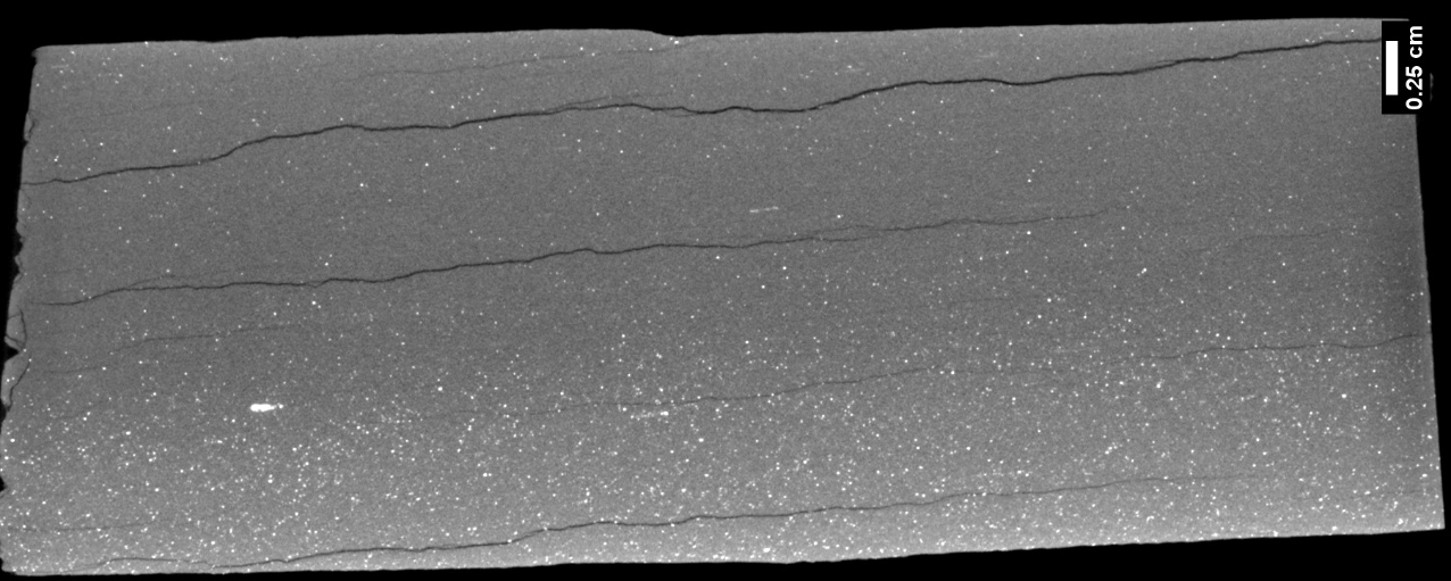
The top image is a shale sample extracted at a depth of 7,920.25 feet from the NETL-funded Marcellus Shale Energy and Environmental Laboratory well located at the Boggess site near Core, West Virginia. A preliminary analysis showed elevated levels of chromium, strontium, barium, cerium, and neodymium (all critical minerals) in the sample.
NETL’s in-situ recovery (ISR) research is under development in order to potentially eliminate the need for large-scale earthmoving, blasting, or tunneling in the extraction of CMMs. Instead, reactive solutions are injected into the subsurface through existing wells to dissolve valuable minerals. The dissolved minerals, now present in the solution, are then pumped back to the surface for processing.
ISR technologies are often called “surgical mining” or “laparoscopic mining” because they represent a precise, data-driven approach that results in only a fraction of the environmental impact and capital expense compared to traditional mining methods.
“In laparoscopic surgery, small incisions and specialized equipment are used to achieve outcomes with minimal collateral damage and less trauma to surrounding tissue,” said NETL’s Christina Lopano, a research geochemist. “In the subsurface, ‘surgical’ or ‘laparoscopic’ mining could serve a similar function by selectively extracting critical materials while maintaining the competence of the surrounding rock.”
Such precision mining supports the U.S. Department of Energy’s Mine of the Future initiatives, which call for modernizing U.S. mining practices and reestablishing strong domestic supplies of CMMs to drive U.S. economic growth.
“Laparoscopic mining provides a remedy to supply U.S. manufacturers with CMMs to make everyday products like smartphones, laptops, and batteries, as well as complex energy and defense systems, and end our reliance on foreign nations who control CMM production,” said NETL’s Dustin Crandall, a research engineer.
Organic-rich shale formations, widely studied for hydraulic fracturing and oil and gas production, commonly contain elevated concentrations of trace metals and critical elements due to the geologic conditions under which they form.
NETL has conducted research on shale geochemistry and subsurface characterization for several decades, resulting in a substantial archive of datasets on subsurface physical and chemical properties. These datasets provide a unique opportunity to evaluate shale formations not only as hydrocarbon reservoirs but also as potential hosts for critical mineral resources.
“We are using that extensive body of knowledge about subsurface oil and gas recovery from unconventional shale formations to evaluate these systems for critical mineral resource potential and to develop novel CMM extraction scenarios,” Lopano said.
Potential surgical mining technologies that NETL is evaluating include:
NETL is a U.S. Department of Energy (DOE) national laboratory dedicated to innovating and accelerating the nation’s energy solutions in hydrocarbons, geothermal energy, and critical minerals production. The Lab further strengthens its impact by engaging with industry, academia, and other stakeholders through four strategically located Centers of Excellence: Coal, Critical Minerals and Advanced Alloys, Oil & Gas, and Geothermal. With research sites in Albany, Oregon; Morgantown, West Virginia; and Pittsburgh, Pennsylvania, NETL operates as one laboratory to create advanced energy technologies that support DOE’s mission and enable affordable, reliable, and secure energy to fuel human prosperity.