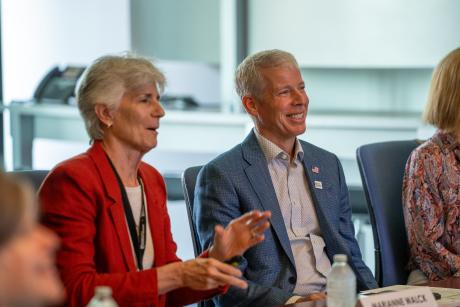
NETL Director Marianne Walck delivered key insights at the Digital Innovation Center of Excellence (DICE) 2025 Digital Engineering Conference at Idaho National Laboratory (INL), participating in a panel discussing critical and emerging technologies in the energy sector.
NETL’s Offshore Geologic Carbon Storage (GCS) Inventory, which contains information about permanent carbon dioxide (CO2) storage sites around the world, now allows users to more quickly locate relevant data through the new Offshore GCS Inventory Dashboard on the Energy Data eXchange® (EDX).
NETL is hosting 52 summer participants in four internship and fellowship programs at its research sites in Albany, Oregon; Morgantown, West Virginia and Pittsburgh, Pennsylvania.
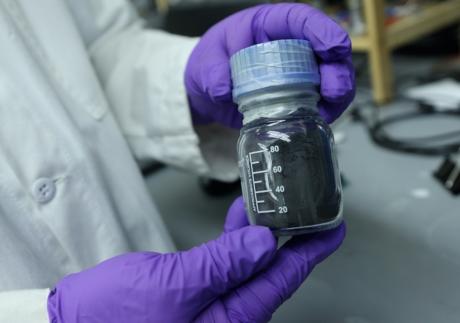
NETL and collaborators are developing a technology for more cost-efficient and time-saving production of graphite — a critical mineral needed for high-value energy and consumer products like batteries, cement and polymer composites — from various grades of petroleum coke, a solid, carbon-rich material byproduct of oil refining.
NETL researchers developed a new process for extracting economically and strategically vital rare earth elements (REE) and critical minerals (CM) from America’s coal fly ash at high quantities and offers several advantages over other available technologies.
NETL researcher Christina Wildfire, an expert in microwave technology and leader of the Lab’s Center for Microwave Chemistry, has been selected for a Bayh-Dole Coalition 2025 American Innovator Award for her work developing and helping to commercialize a microwave-assisted method of converting waste plastics to useful products.
Construction is underway on NETL’s Computational Science and Engineering (CSE) Center in Morgantown, West Virginia — a state-of-the-art facility for advanced data and computing solutions related to applied energy challenges.
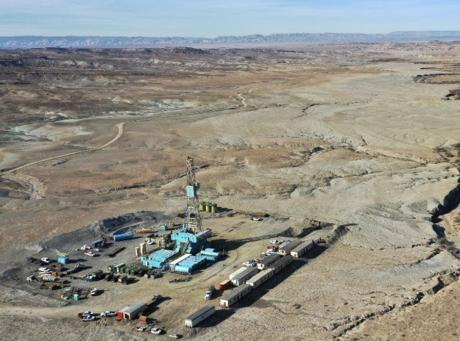
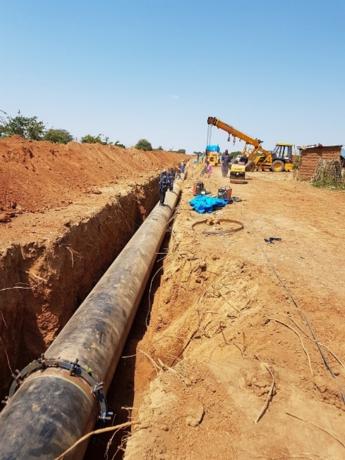
NETL and Colorado School of Mines are partnering to advance the use of fiber-optic sensing to monitor fracture growth in the subsurface and optimize the production of natural gas from unconventional reservoirs, an important resource to meet the nation’s growing energy needs.
Access to data is essential for research and development. Higher quality data result in higher quality research, but when those data contain sensitive or proprietary information, they might be omitted from public products to protect sensitive locations, innovative plans and proprietary elements of important databases and analyses.
NETL Director Marianne Walck addressed Carnegie Mellon University during its 2025 Energy Week, highlighting how the Lab is leveraging its high-performance computing and artificial intelligence (AI) research capabilities to accelerate energy technology discovery and development.