Back to Top
Skip to main content
NETL Logo
mfix
NETL is bringing uncommon skills, equipment, analysis and communication tools to the work of a national laboratory consortia working to understand and improve how biomass feedstock integrates with combustion processes in biorefineries. NETL Director Brian Anderson, Ph.D., announced that the Laboratory, one of 17 Department of Energy (DOE) national laboratories, has officially joined the DOE Biomass Energy Technology Office’s Feedstock-Conversion Interface Consortia Research program. Other consortia members include Argonne, Sandia, Los Alamos, Berkeley, Idaho, National Renewable Energy, Oak Ridge, and the Pacific Northwest national laboratories. According to DOE, a feedstock is any renewable, biological material that can be used directly as a fuel or converted to another form of fuel or energy product. Biomass feedstocks are the plant and algal materials that can be used to create fuels like ethanol, butanol, biodiesel, and other hydrocarbon fuels. Biomass feedstocks include corn starch, sugarcane juice, crop residues such as corn and sugarcane bagasse, purpose-grown grass crops, and woody plants. They are considered renewable resources.
Comp Tools
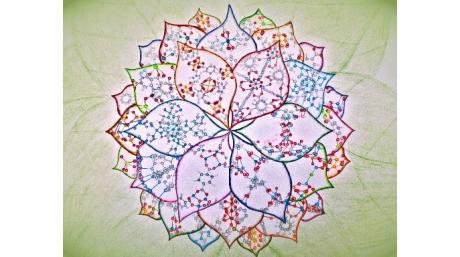
NETL is using powerful computational tools to identify advanced membrane materials that can cut carbon capture costs to less than $50 per metric ton, an achievement that will boost the viability of the nation’s coal-fired power fleet to meet America’s growing energy needs. Polymer-based membranes provide a simple means of separating carbon dioxide (CO2) from post-combustion flue gas to meet federal emissions requirements at coal-fired power plants. However, identifying optimal materials that offer high permeability and selectivity at an affordable cost is a challenge, with millions of possibilities. NETL partnered with the University of Pittsburgh to investigate the use of mixed matrix membranes (MMMs), which incorporate porous nanoparticles known as metal-organic frameworks into the matrix of a sturdy polymer to enhance its capabilities. The team — led by NETL’s Jan Steckel, Ph.D., who worked with Pitt’s Chris Wilmer, Ph.D., and Lab colleagues Olukayode Ajayi, Ph.D., and Samir Budhathoki — modeled more than 1 million possible MMMs to evaluate their properties and estimate the associated cost of carbon capture.
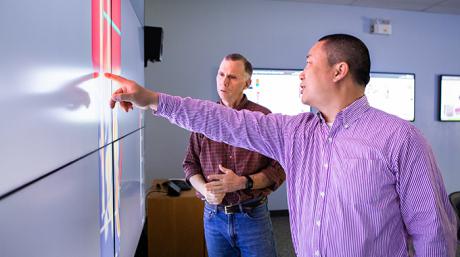
Chris Guenther and Yong Liu
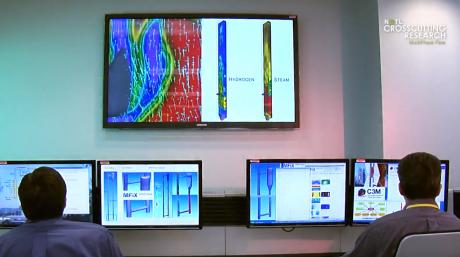
In a cost-saving computer modeling effort, the National Energy Technology Laboratory (NETL) assisted in solving a critical technical issue at the U.S. Department of Energy (DOE) Office of Environmental Management (EM) Integrated Waste Treatment Unit (IWTU), preventing a long-term delay of start-up operations. IWTU is an Energy Department facility designed to treat 900,000 gallons of radioactive liquid waste by heating and essentially drying it into a solid granular material for long-term storage. The heat required in this process is created by a piece of equipment called a denitration mineralization reformer (DMR), in which coal, steam, air and oxygen interact. Because this mixture contains multiple phases of matter (i.e., solids and gases), an understanding of multiphase flow is critical for design and troubleshooting. “NETL is a globally recognized leader in multiphase flow,” said NETL researcher Chris Guenther, who worked on the project. “So, when IWTU encountered an issue with their DMR, they called on the Lab’s expertise.”
wpasb
North Allegheny Senior High School Team 1 (Wexford), and Marshall Middle School (Wexford) claimed victory at the 28th annual Western Pennsylvania Regional Science Bowl (WPASB), organized and co-sponsored by NETL. The high school and middle school events were held Feb. 23 and March 2, 2019, respectively, at the Community College of Allegheny County’s (CCAC) South Campus, in West Mifflin, Pa. About 40 teams from high schools and 32 teams from middle schools in 19 regional counties throughout western Pennsylvania participated in the competition. The WPASB tested students’ knowledge of math and science with round-robin and double-elimination competition rounds. This year’s WPASB competition included welcoming remarks from NETL Director Brian Anderson for the high school competition and NETL Deputy Director Randy Gentry for the middle school competition, as well as representatives from CCAC.
Educational Workshops
Registration is now open for two workshops hosted at NETL-Pittsburgh for teachers in April. NETL’s educational workshops provide middle and high school teachers with tools and resources to bring science, technology, engineering and mathematics (STEM) into the classroom. These annual gatherings serve to “educate the educator” and inspire the next generation of innovators through fun activities teachers can take back to share with their students. The Light, Color and Spectroscopy for Kids workshop, being held April 4, 2019, explores a wide variety of activities for educators to use to assist their students in understanding important concepts about light and color. The two-day workshop is held in partnership with the Spectroscopy Society of Pittsburgh, and teachers receive most of the materials needed to perform the activities in their own classrooms.
STEM
Inspiring the next generation of scientists, engineers and other STEM professionals means showing children and youth how science and math form the foundation of the world around us. It means demonstrating to middle and high school students how these fields are fun and fascinating, and it means welcoming college and graduate students into the lab to advance their research skills and instill a passion for lifelong learning. NETL researchers are proud to share their expertise and STEM enthusiasm with students in our local areas. Here are few examples of how NETL scientists and engineers are making a difference in their communities.
Sporian’s ultra-high temperature probes were installed for testing at Southwest Research Institute's Pressurized High-Temperature Flow Facility.
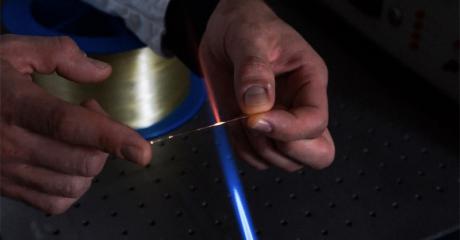
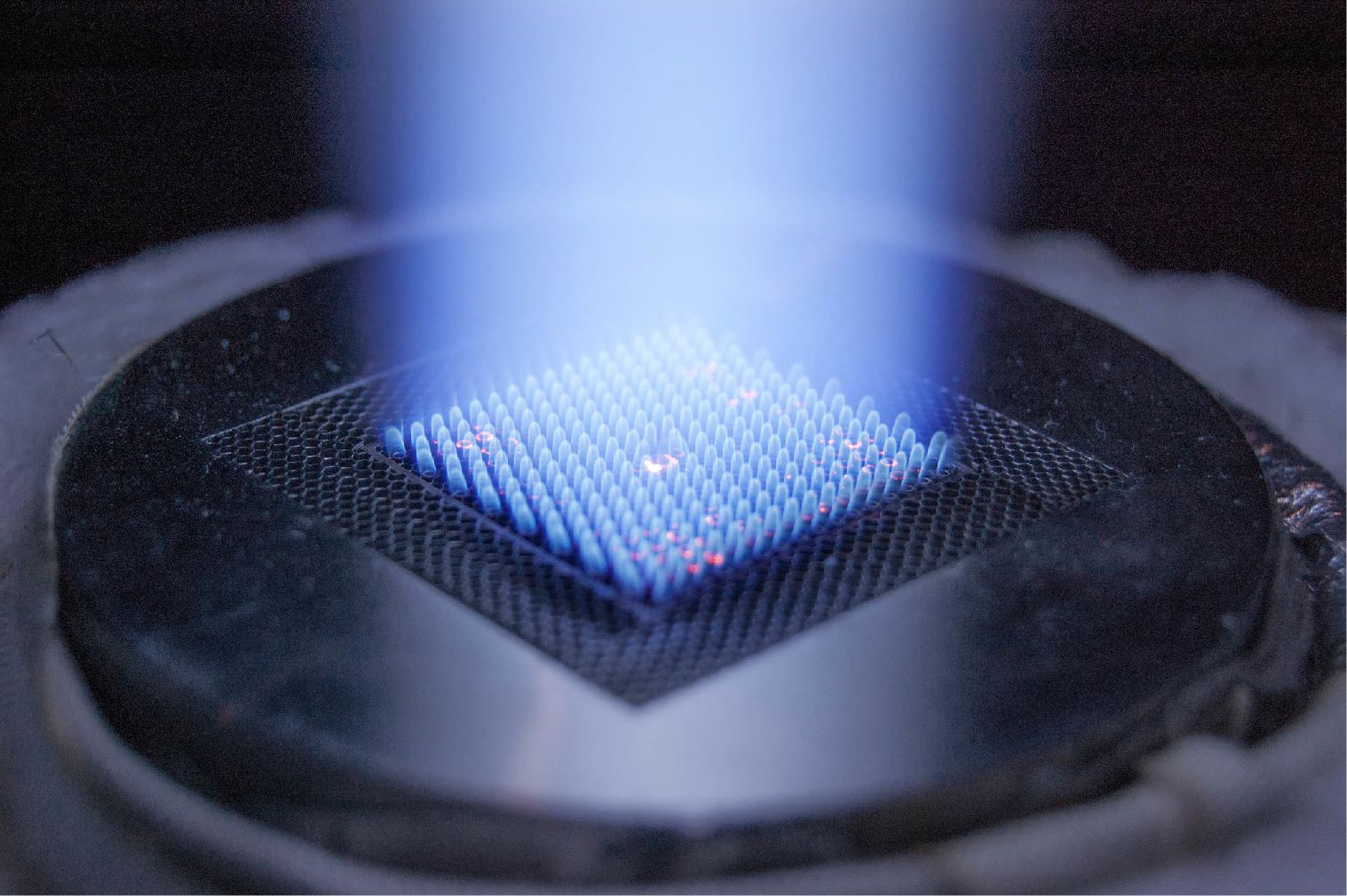
Developing turbines and other advanced energy systems that can operate at extremely high temperatures boosts efficiency, thereby cutting operating costs and offering potential savings for consumers. Monitoring is critical to ensure that these complex systems run safely and effectively, with minimal downtime; however, the necessary ultra-high temperatures also introduce challenges in developing sensors that can withstand such harsh environments. A recently completed NETL-managed project with Colorado-based Sporian Microsystems, Inc., produced smart temperature sensors that can operate up to 1800 degrees Celsius as well as pressure sensors that operate at temperatures up to 1600 degrees Celsius for improved performance in monitoring gas turbines, combustion systems and more. Extensive testing in relevant environments shows that the developed sensors offer the potential for greater durability, functionality and reliability at a more affordable price than existing alternatives.
Students learning STEM
The coming decades will usher great opportunities for high-paying jobs in the science, technology, engineering and math (STEM) industries, but if too few candidates enter the STEM education pipeline, those jobs could go unfilled. That is why it so important to reach out to today’s elementary and middle school students and get them excited about STEM careers. This outreach is especially relevant for underserved and underrepresented populations because the math and science proficiency of these students typically falls below the national average, making a STEM job sometimes seem out of reach. NETL’s STEM Education Outreach Team strives to change that mindset by traveling to “at-risk” K-6 elementary and middle schools around the Lab’s Morgantown, West Virginia and Pittsburgh, Pennsylvania sites to bring stimulating “hands-on, minds-on” activities that make the students feel like they are part of the STEM conversation.
Science bowl winners
Morgantown High School (Team 1) and Suncrest Middle School (Team 1), both of Morgantown, claimed victory at the 28th annual West Virginia Regional Science Bowl (WVSB), organized and co-sponsored by NETL. The event was held Feb. 8-9, 2019, at the West Virginia University (WVU) Mountainlair in Morgantown, West Virginia. Twenty-four teams from high schools and 24 teams from middle schools throughout the Mountain State participated in the competition, which was also co-sponsored by WVU. The WVSB tested students’ knowledge of math and science with round-robin and double-elimination competition rounds. Middle school teams competed Feb. 8, followed by high school students on Feb. 9. This year’s competition included welcoming remarks from Congressman David McKinley, as well as representatives from NETL and WVU. Participants also explored hands-on engineering activities and an academic information fair.
STEM Students
Toss-up question, mathematics: How many students nationwide compete in regional Science Bowls each year? The correct answer is more than 9,000 high school students and 4,500 middle school students. Hundreds of those students compete at the West Virginia and Western Pennsylvania Regional Science Bowls, organized and co-hosted each year by NETL to promote science, technology, engineering and math (STEM) education. These fast-paced, quiz-style events help middle and high school students expand their science and math knowledge, build teamwork skills, and learn how to excel under pressure as they compete for a spot in the U.S. Department of Energy’s National Science Bowl. Described as “a competition like no other,” more than 290,000 students have participated in the National Science Bowl throughout its nearly 30-year history. NETL Director Brian J. Anderson, Ph.D., is among them. His first exposure to the Lab was as a Science Bowl participant at what was then known as the Morgantown Energy Technology Center, a predecessor to NETL.