Back to Top
Skip to main content
NETL Logo
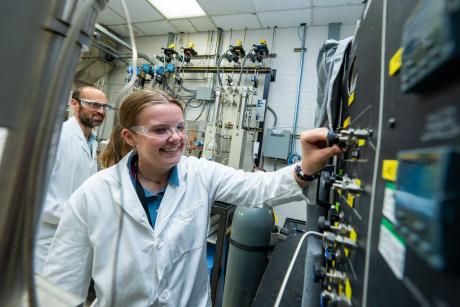
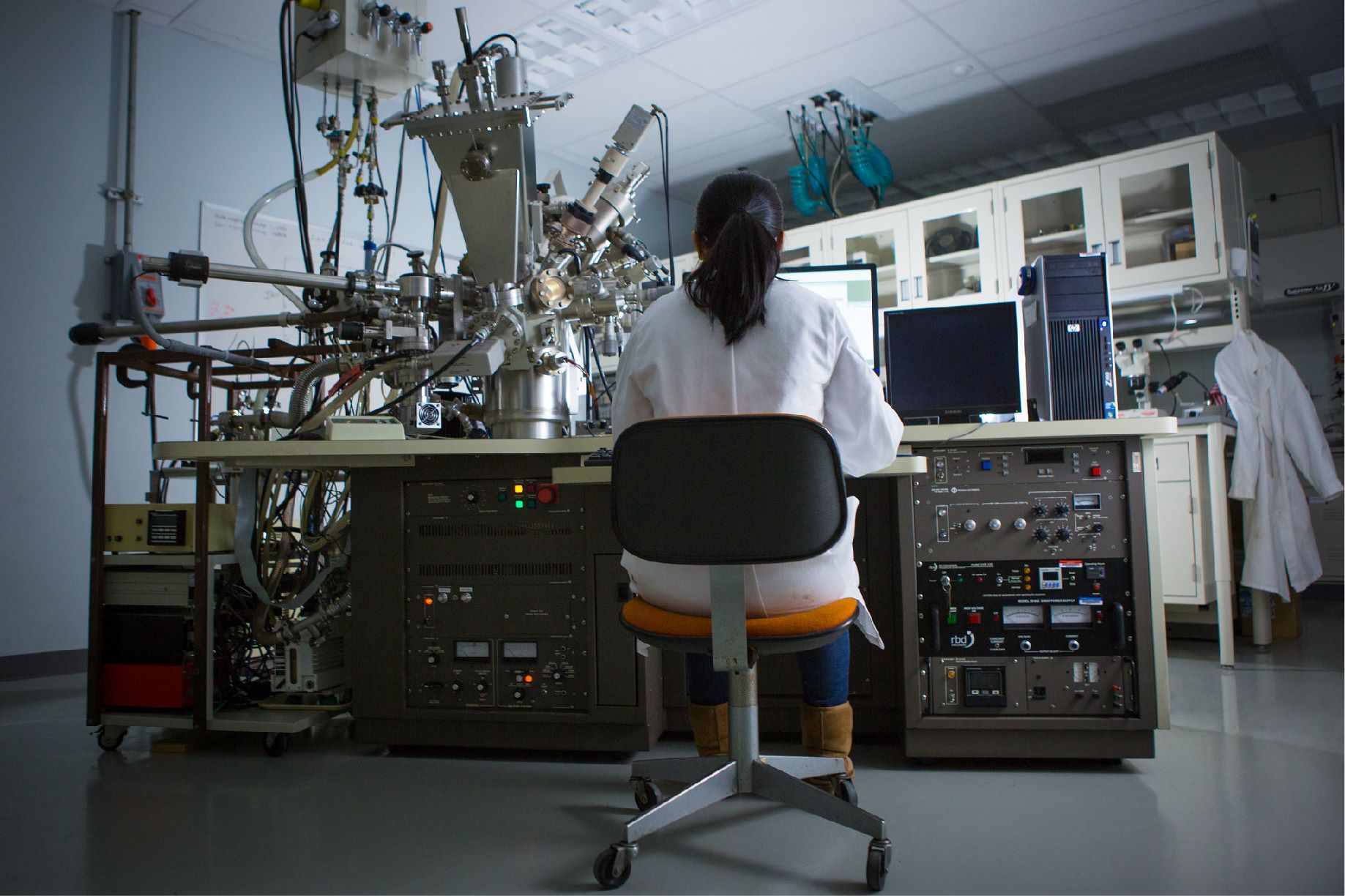
2025 MLEF Research Associate Mya Riggle working in the lab with mentor Daniel Haynes
NETL has announced that the application window is open for the summer 2026 Science Undergraduate Laboratory Internship (SULI) program, a paid 10-week summer internship program sponsored by the U.S. Department of Energy (DOE). Applications are due by 5 p.m. EST Jan. 7, 2026. Access to the online application system is available here.
 Mickey Leland Energy Fellowship
NETL, in its commitment to cultivating America’s next generation of scientists, is seeking students from around the country to apply to participate in the 2026 Mickey Leland Energy Fellowship (MLEF) summer program for the U.S. Department of Energy (DOE).
Genesis Mission Launch
WASHINGTON—President Trump issued an Executive Order to launch the Genesis Mission, a historic national effort led by the Department of Energy. The Genesis Mission will transform American science and innovation through the power of artificial intelligence (AI), strengthening the nation’s technological leadership and global competitiveness. 
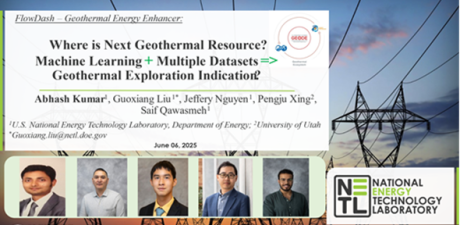
The winning researchers include NETL’s Abhash Kumar and Guoxiang Liu, the University of Utah’s Pengju Xing, and National Nuclear Security Administration interns Jeffrey Nguyen and Saif Qawasmeh.
An NETL-led team secured first place in the engineering track of the Geothermal Energy from Oil and Gas Demonstrated Engineering (GEODE) Datathon for their development of the FlowDash Geothermal Energy Enhancer, a new machine learning (ML) tool that can reduce risks and costs for geothermal energy operations and enhance safety for neighboring communities.
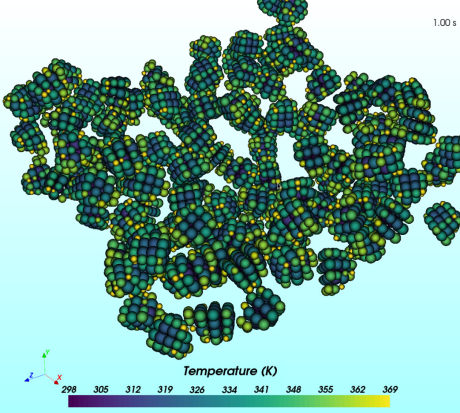
The MFiX Glued-Sphere Particle model
NETL has released the latest version of its award-winning Multiphase Flow with Interphase eXchanges (MFiX) — a computational fluid dynamics (CFD) software suite designed to shorten the time and reduce the cost associated with developing new power generation technologies.
NETL Morgantown summer interns and mentors
NETL is hosting 52 summer participants in four internship and fellowship programs at its research sites in Albany, Oregon; Morgantown, West Virginia and Pittsburgh, Pennsylvania.
Rendering of NETL’s new Computational Science and Engineering Center.
Construction is underway on NETL’s Computational Science and Engineering (CSE) Center in Morgantown, West Virginia — a state-of-the-art facility for advanced data and computing solutions related to applied energy challenges.
GISA’s development highlights NETL’s commitment to addressing the nation’s energy, economic, and environmental challenges, with a focus on building a sustainable future for all Americans.
Access to data is essential for research and development. Higher quality data result in higher quality research, but when those data contain sensitive or proprietary information, they might be omitted from public products to protect sensitive locations, innovative plans and proprietary elements of important databases and analyses.
NETL’s Jordan Musser examines multiphase flow within a reactor using the Lab’s Multiphase Flow with Interphase eXchanges (MFiX) code.
NETL researchers reached a high-performance computing (HPC) milestone, running advanced energy modeling code on the world’s first exascale supercomputer — a powerful new class of computing systems capable of ushering in a new era of precision, fidelity and reliability for simulation-based engineering.
NETL researchers take basic measurements on site near the wellheads and prepare samples for microbiology analysis when back at the Lab.
A first-of-its-kind NETL research project involving the Bakken Shale has shown that a one-size-fits-all approach to understanding the subsurface and overcoming well site operational and water management challenges doesn’t necessarily apply. This is due to the often variable chemical and biological dynamics present at fossil fuel well sites.