 Share
Share Contact
Natural gas has been used as an energy source for hundreds of years, with China's first recorded use around 500 B.C.E. French explorers noticed the Native Americans around Lake Erie igniting natural gas as far back as the 1600s. The first commercial natural gas well was drilled in the 1820s. Later, with the development of long-distance natural gas pipelines in the 20th century, the widespread use of natural gas as a power source in the United States became possible. Today, gas is used for heating, cooking and energy generation in homes and businesses across the country.
1821
First Commercial Gas Well
William Hart drilled the first commercial natural gas well in Fredonia, New York.
1891
120-Mile Long-Haul Pipeline
The first lengthy pipeline, spanning 120 miles, transported natural gas from central Indiana to Chicago, Illinois, but faced efficiency issues, necessitating regular maintenance for corrosion and leaks.
1925
First All-Welded Pipeline
The first all-welded pipeline was built, stretching over 200 miles from Louisiana to Texas. The all-welded pipeline provided a stronger pipeline that required less maintenance and was more resistant to leaks.
1920s and 1930s
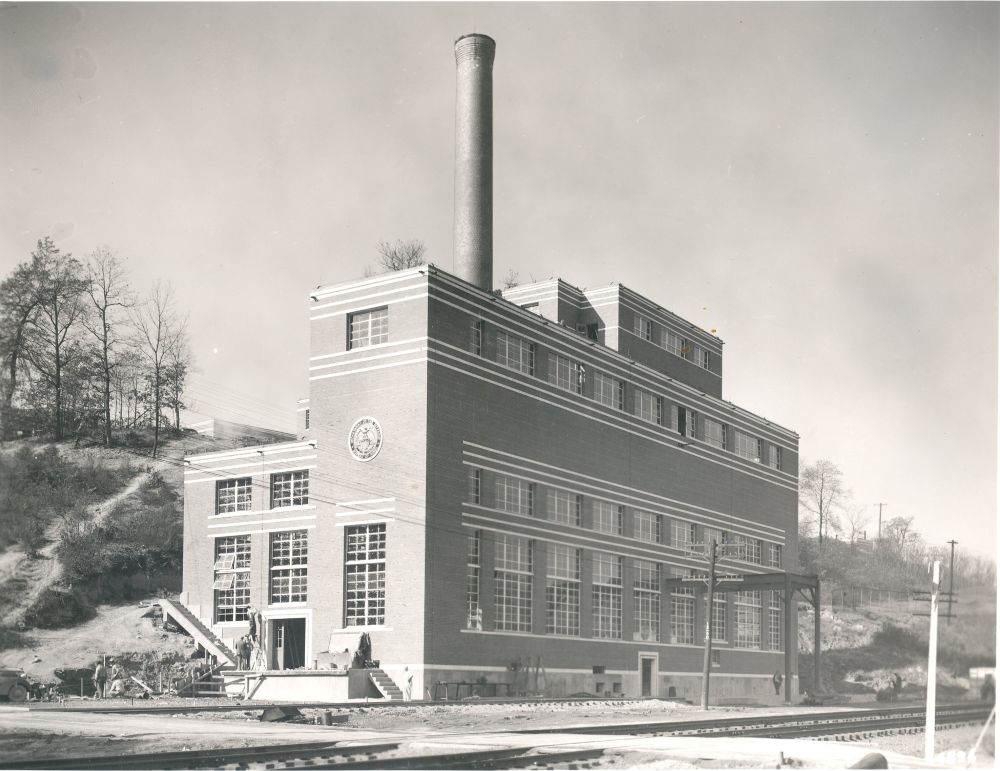
Pittsburgh Station Investigates Natural Gas
Through public-private cooperative agreements, the Pittsburgh Station investigated issues such as detecting odorless gases, ventilating tunnels that carried motor-vehicle traffic and evaluating the safety of leaded gasoline.
1944
Synthetic Liquid Fuels Act of 1944
National interest in synthetic fuels production intensified after World War II, leading to the Synthetic Liquid Fuels Act of 1944. The Synthesis Gas Branch Experiment Station was initiated at West Virginia University in Morgantown, West Virginia, in 1946.
1967
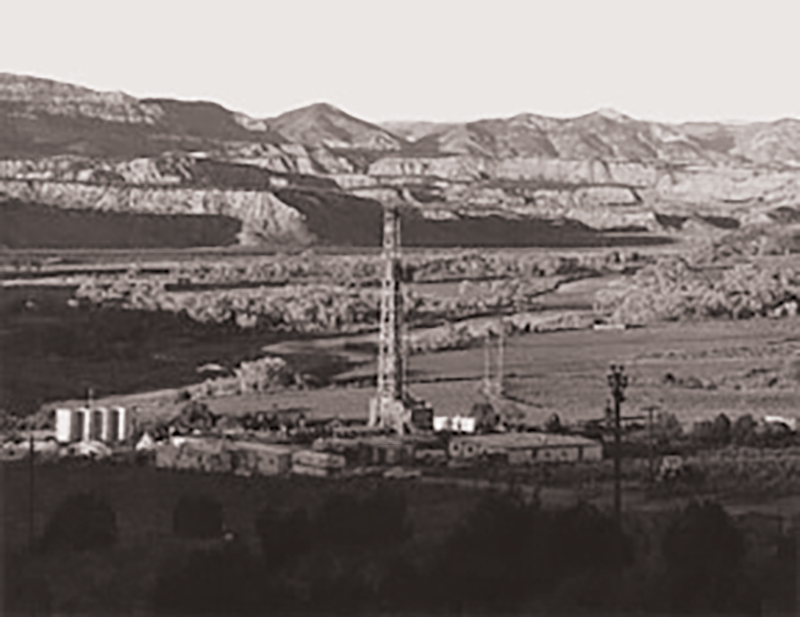
First Experiment in Underground Nuclear Fracking
Project Gasbuggy tested underground nuclear explosions to enhance natural gas production in northwest New Mexico by creating fractures in shale formations. The experiment successfully showed that gas production could be stimulated, but the resulting gas was radioactive, limiting its commercial viability.
Late 1970s and Early 1980s
Federal Research To Develop Gas
Concerns over dwindling U.S. natural gas resources led to federally sponsored research aimed at estimating gas volumes in unconventional reservoirs like gas shales, tight sandstones and coal seams. From the 1970s to the 1990s, the DOE’s Office of Fossil Energy invested $92 million in Devonian shale research.
1976
Advancing Unconventional Gas Extraction
The Eastern Gas Shales Project laid the groundwork for later shale gas production. This initiative focused on mapping the shales in the Appalachian Basin. That same year, two Morgantown Energy Research Center engineers patented a method for adapting directional drilling to coalbed methane recovery.
1983
Methane Hydrates
Federal researchers started studying methane hydrates, solid ice crystals found where natural gas meets cold water, which enclose methane gas. In the 1980s, experts speculated that these crystals might contain more methane than all other U.S. natural gas resources combined.
1980s
Developing Fracking Techniques
The Multi-Well Experiment in Colorado, conducted through collaboration among multiple national laboratories, utilized microseismic mapping for real-time monitoring of hydraulic fracturing.
1991
First Horizontal Well
Mitchell Energy drilled its first horizontal gas well — the C.W. Slay #1 — in the Barnett Shale in 1991. This significantly increased gas production compared to traditional vertical drilling.
2000s
Shale Gas Boom
Between 2005 and 2019, U.S. natural gas production increased by 88%, rising from 18.1 trillion cubic feet to 34.0 trillion cubic feet, largely due to advancements in hydraulic fracturing and horizontal drilling.
Today
Federal researchers are working on shale gas water management and air quality through various research projects. DOE is developing new technologies and enhancing knowledge about shales through field laboratories and research at national laboratories. A key aspect of this effort is improving the characterization of hydraulic fracture attributes such as height, length and orientation.